


Technical Standards
BRE Furnace Test
Watch our Chute Fire Closure Plate put to the test in the BRE furnace. This rigorous testing demonstrates how our components performs under extreme conditions to contain fire and smoke, and proves that our systems not only meet, but exceeds industry fire safety standards
Currently, there are no specific British Standards (BS) or European Norms (EN) dedicated solely to chute systems. In response to this regulatory gap, Hydro Chute proactively approached the Building Research Establishment (BRE)—a UKAS-accredited third-party furnace testing laboratory and recognised expert witness for the prosecution at the Grenfell Inquiry.
Following consultation with BRE, the following standards were identified as most relevant to fire performance in chute installations and have since been adopted into Hydro Chute’s product specifications:
- BS 476 Part 20 & 22 Section 6 (1987) — Structural fire integrity
- BS 476 Part 31.1 and BS EN 13501-2:2007 + A1:2009 — Smoke tightness and smoke leakage performance
Given that smoke inhalation is the leading life safety risk in fire scenarios, Hydro Chute equipment is tested specifically to prevent smoke leakage—ensuring maximum protection and compliance with the best-practice guidance available.
Standards & Testing: Addressing the Absence of Specific BS/EN Chute Regulations
BS 476: Still Relevant for Refuse Chutes?
BS 476 Part 20:1987 and Part 22:1987 are being phased out in favour of European standards.
How does this transition affect Hydro Chute’s products?
Yes, the industry is moving toward harmonised European standards, but BS 476 remains the current benchmark for chute systems—until at least September 2029, which is the agreed deadline for finalising the BS/EN replacement standard.
The British Standards Institution (BSi) is currently reviewing which EN test method will replace BS 476 for chute-related applications, particularly in the context of updating BS 1703:2005 (the UK standard for refuse chutes). Two EN tests are currently under consideration:
- BS EN 1634-1:2014 — Fire resistance tests for door and shutter assemblies
- BS EN 1363-1:2020 — General requirements for fire resistance testing
However, no decision has been finalised, and further consultation is required to determine which, if either, of these will be adopted for chutes.
What Does This Mean for Clients and Existing Installations?
There is no need for concern. Even after the new BS/EN standard is introduced, it will apply only to new installations, not retrospectively.
Existing installations tested to BS 476 will remain compliant and valid under current legislation.
BS 476 remains fully relevant and valid for chute systems today. Hydro Chute continues to lead the industry by aligning with the best expert advice and will transition to new standards as and when they are officially adopted.
Please see industry’s Niall Rowan eloquently explain the issues surrounding the demise of BS476 in the adjacent video
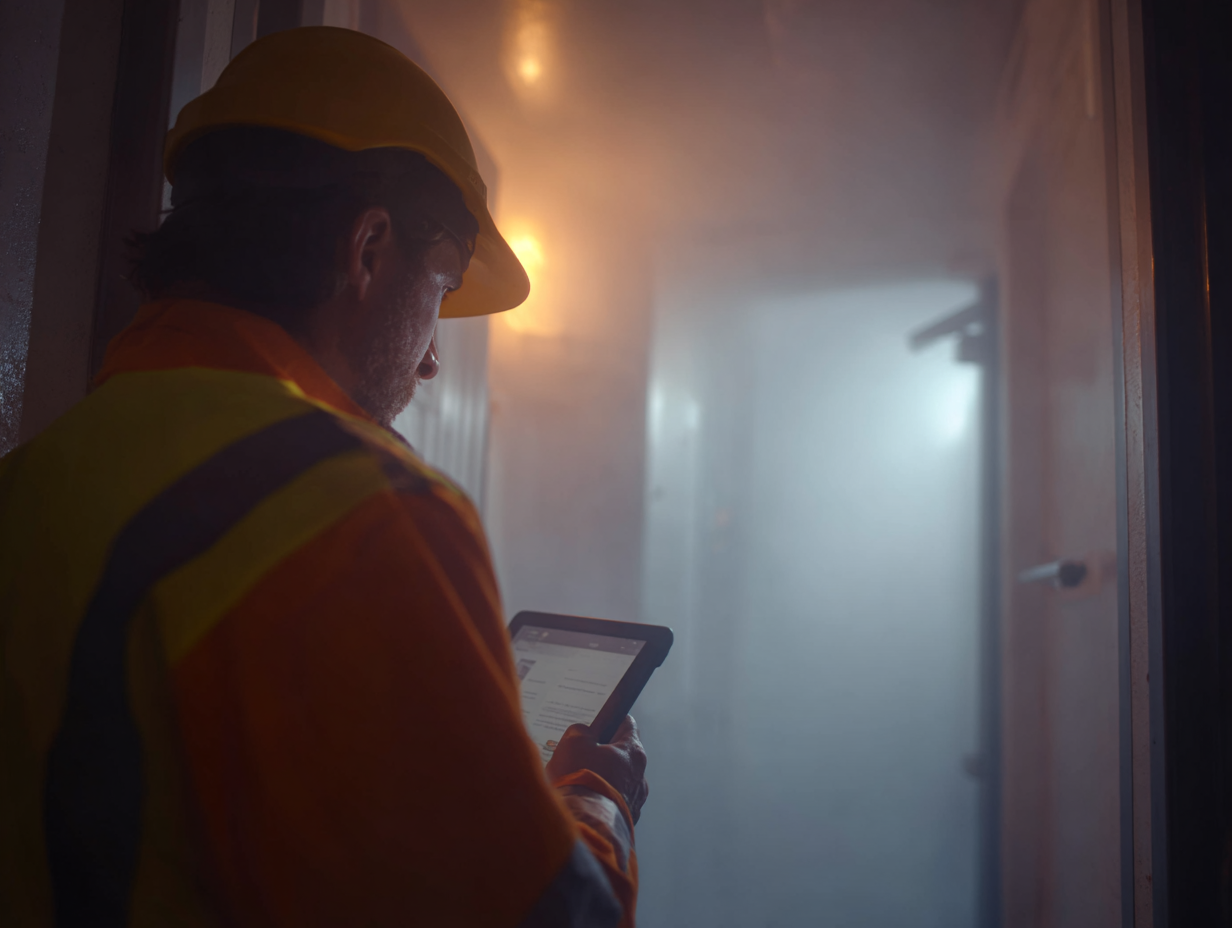
Hydro Chute’s Commitment to Compliance – Now and in the Future
Hydro Chute has taken a proactive stance to ensure our products meet the highest fire safety standards available, even in the absence of specific guidance for chutes. Following the Grenfell tragedy, we sought expert input from the Building Research Establishment (BRE), the UK’s leading fire testing authority and a UKAS-accredited laboratory.
As a result, our equipment is currently tested to the following standards:
- BS 476 Part 20 & 22:1987 — Fire integrity and structural performance
- BS 476-31.1 — Smoke tightness / leakage
- BS EN 13051-2:2007 + A1:2009 — Smoke tightness / leakage
Once a new BS/EN standard is confirmed for chute applications, Hydro Chute will retest all relevant products accordingly to maintain our market-leading safety and compliance position.
Installation: Competency and Assurance Beyond Product Testing
Are there any approved standards or methods for chute equipment installation?
While no formal installation standards for chute systems exist, Hydro Chute has established chute-specific installation training and competency protocols for its engineering teams.
During BRE furnace testing, not only was our equipment assessed—our entire installation process, including:
- Fixings
- Sealants
- Methods of sealing for fire and smoke resistance
was tested under the same rigorous conditions. Our own engineers conducted these installations under test, ensuring real-world replication of performance.
Hydro Chute uses only in-house engineers—never subcontractors. This guarantees that the same high standard of installation demonstrated in BRE’s controlled test environment is delivered on every project. The result? Verified 240-minute resistance to fire and smoke leakage—not just from the product, but from the complete installed system.
In collaboration with BRE (a UKAS-accredited furnace testing laboratory and key expert witness in the Grenfell Inquiry), Hydro Chute developed the UK’s first and only chute-specific training programme covering inspection, testing, servicing, and maintenance.
All Hydro Chute engineers complete this training and receive BRE certification. This commitment to demonstrable competence sets us apart from others relying solely on experience-based claims. Our certified engineers are fully qualified to work on any chute system—regardless of manufacturer, age, or type—offering clients assurance of our capability and professionalism.
Contractor Competency
Data Capture & Reporting
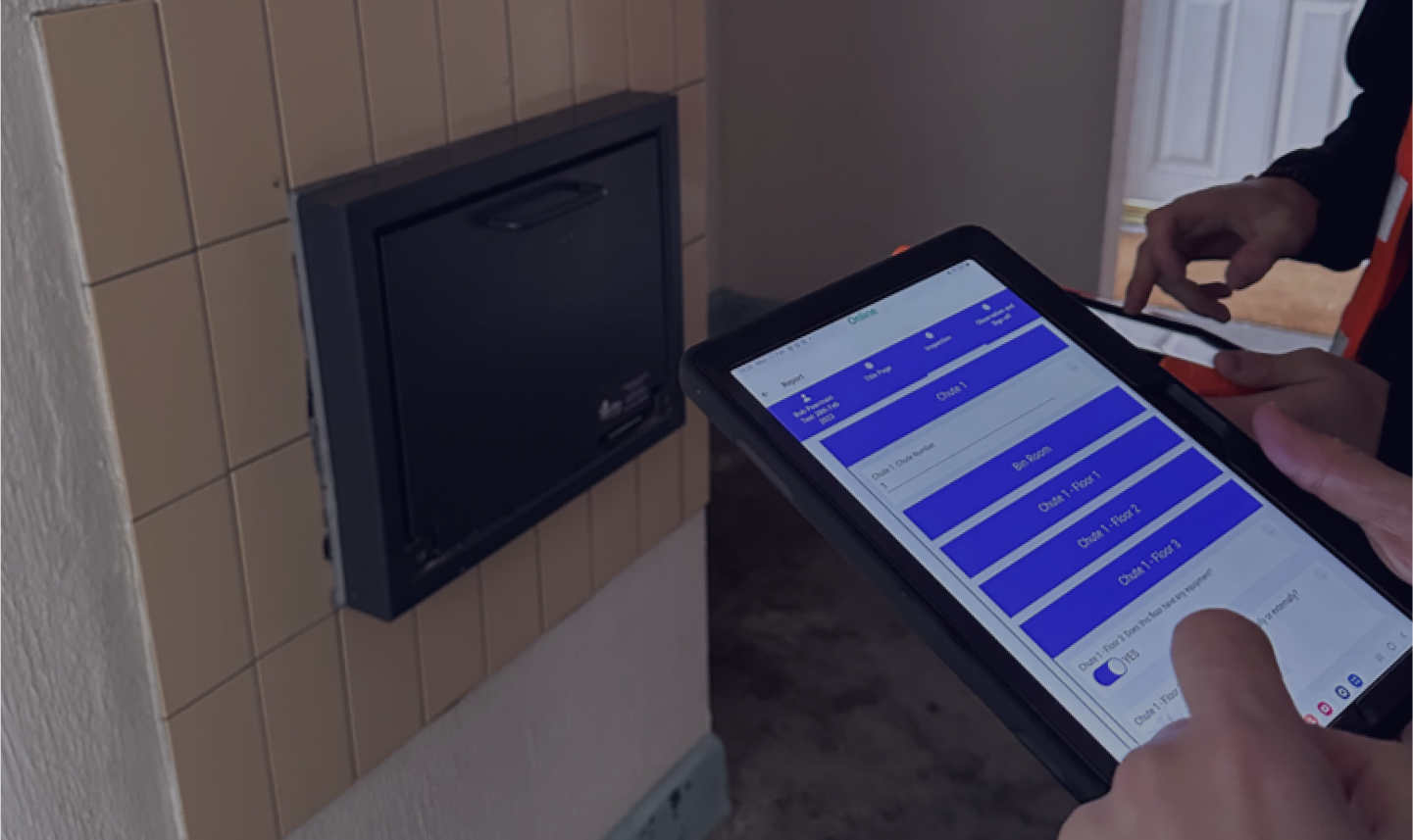
All inspection, testing, and service data is digitally and photographically recorded to form a secure, court-admissible, time- and location-stamped report.
Our in-house developed Revizio app allows engineers to:
- Capture testing data and failures live, with photographic evidence.
- Automatically upload findings to secure cloud storage
- Generate an executive summary in Excel, with prioritised remedial actions and itemised pricing by site, chute, and floor
All reports are rigorously checked by our HQ team and issued to clients within 10 working days, ensuring transparency, traceability, and efficient issue resolution.


